
Union Printers Home
Every Worker Deserves a Castle on the Hill

Not often enough do we consider the names of roads. Through the city of Colorado Springs runs a road called Union. They lead us to important things in our daily lives, but when we take a step back, a road's name is a marker of power in history. Those who lay and name the roads lay the groundwork—literally—of what our community is able to build.
I live on Academy Blvd., and at the time of writing, Thunderbirds boom over my apartment in celebration of the Air Force Academy Graduation. Today, the backbone of our city’s economy, our identity, is our military presence.
So where does Union Blvd. get its name?
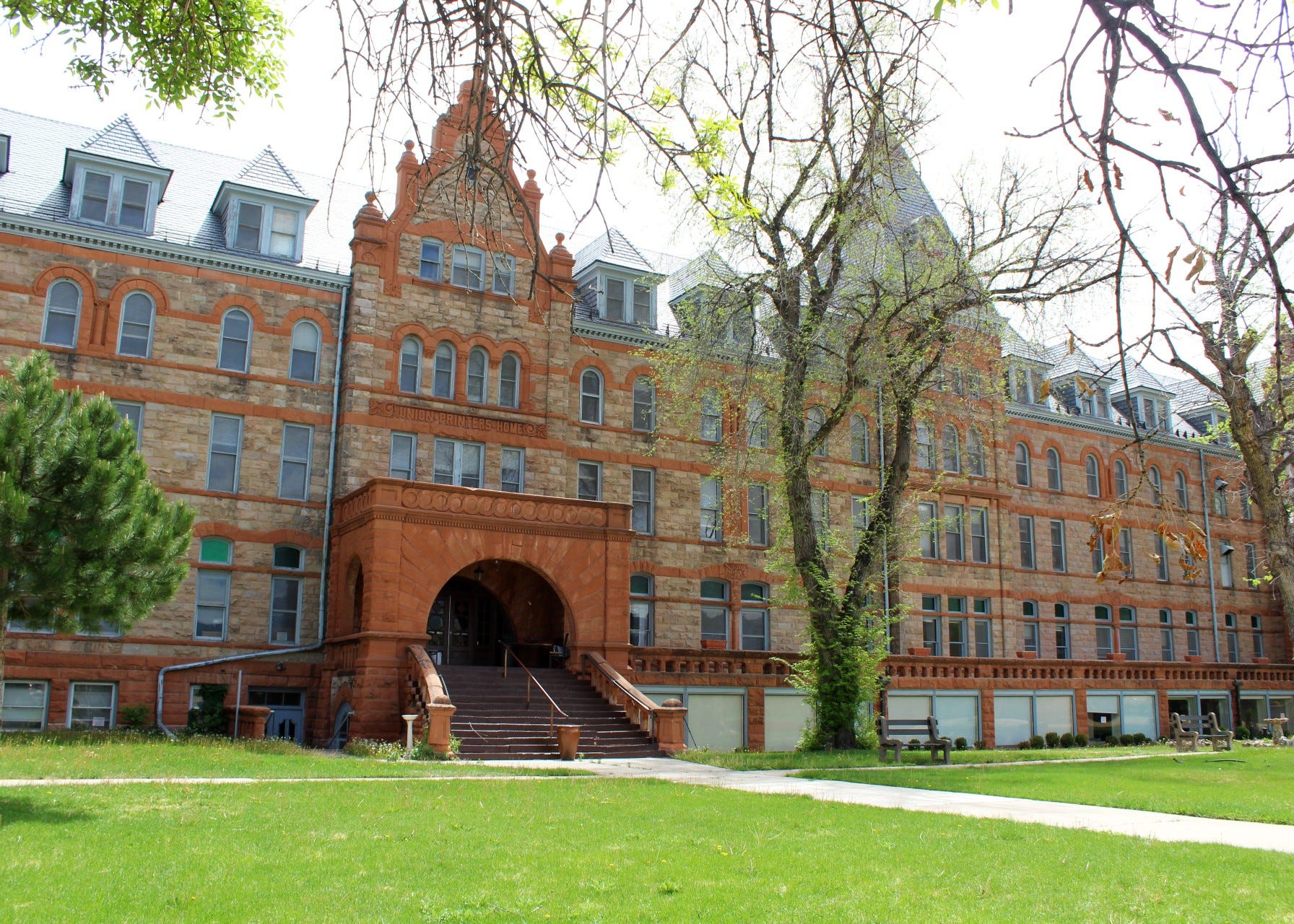
Union Printers Home, built in 1892, is a relic of our city’s intertwined history with Tuberculosis tourism in a time when 1 in 3 Americans were members of a labor union. Before the cure for Tuberculosis was discovered, Colorado Springs’ dry climate and sunny weather made it an optimal spot for Tuberculosis Sanatoriums—places to receive specialized care for the disease. And, members of the International Typographical Union (ITU) were uniquely affected by this condition.
The International Typographical Union (ITU) is one of the oldest unions in the country, and it has a significant presence in Colorado Springs. Back in the day, printing was a lot less “ctrl + p” and a lot more “complete back breaking work with dangerous heavy machinery and maybe get Printers Lung (an advanced form of Tuberculosis caused by working with chemicals in the printing process) for your troubles.”
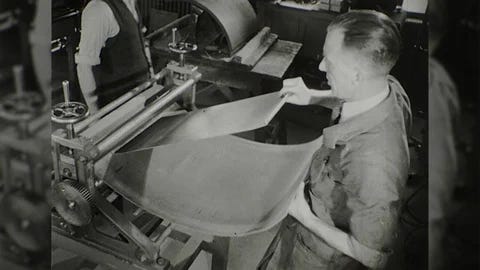
Therefore, the ITU prioritized the creation of Union Printers Home: the castle on the hill. A place for its members to receive specialized care.
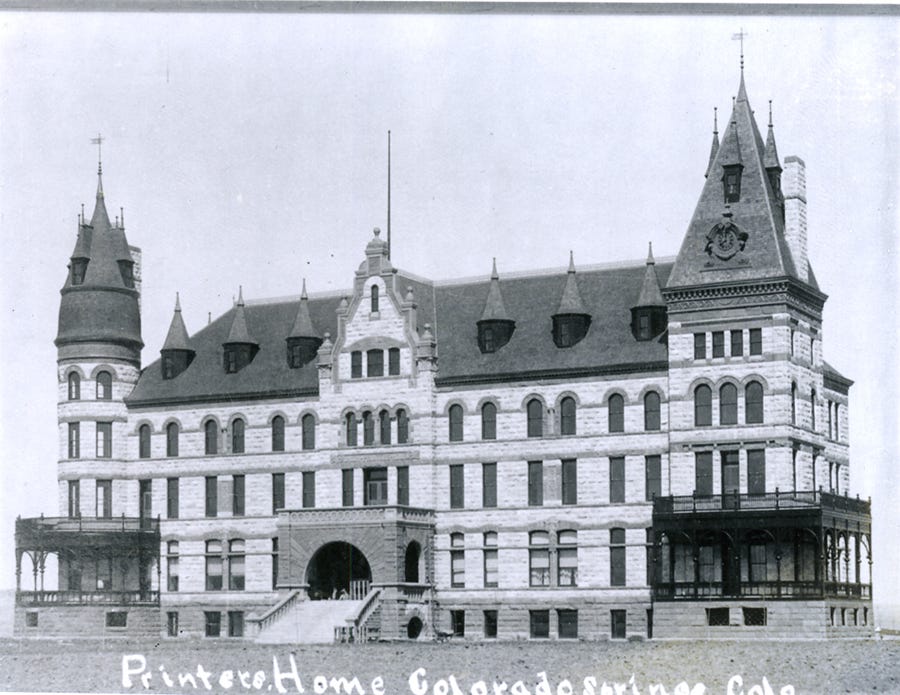
Upon the opening of Union Printers Home, rooms were immediately filled to capacity, leading to a tent city popping up on the large lawn stretching out from the castle. An extension was quickly built, and throughout its history a North and South dorm were also added. Significantly the North Dorm would serve members not in need of immediate medical care, opening up Union Printers Home to members simply looking to retire and enjoy the facilities for the final phase of their lives. Meanwhile, the South Dorm would serve as a full service medical wing and hospital. For a period, the ITU even relocated its headquarters to the ground of Union Printers Home
Red sandstone walls house an extensive library, dining hall, several recreational areas, and even an auditorium. Workers also operated a modestly priced cantina that would generate money for parties and events. Furthermore, while the ITU does not have the most progressive history when it comes to race relations, they did employ women as counselors and caretakers at Union Printers Home. Due to the terminal nature of a disease such as tuberculosis, these counselors would often work with members to settle their affairs and provide end of life counseling care. Also on site, two full time bakers, a dairy stable with on-site butchers, and—of course—a full time physician and medical team. If you were a member of the ITU in its heyday, you knew that—no matter if you needed medical care or not—you had a place to retire to at the end of your service, and it would be a place of dignity. A place to enjoy the end of your life.
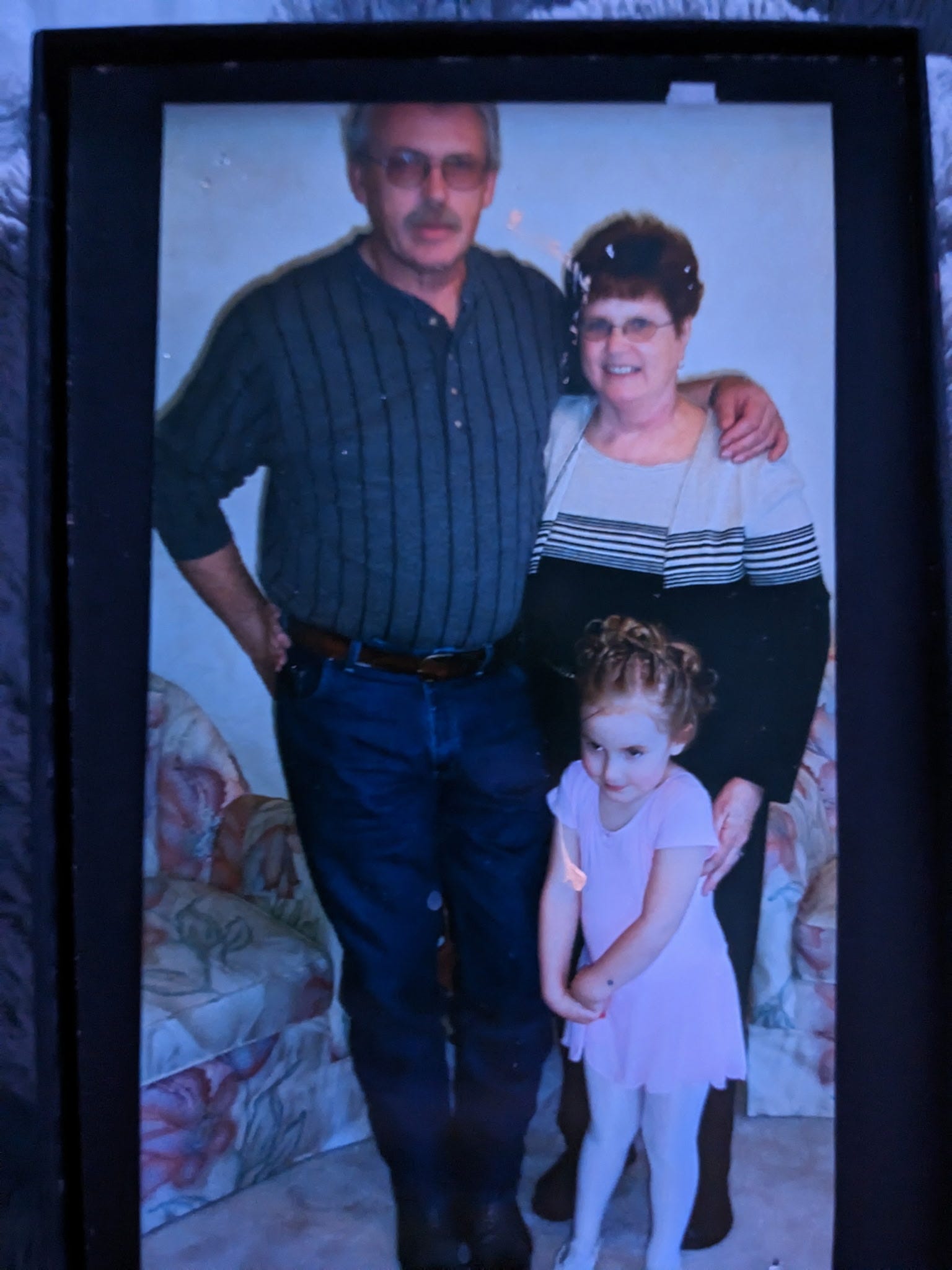
My wife was raised by her grandparents. Both her grandparents were working class Iowans: her grandfather a cross-country trucker and her grandmother a nurse at a retirement home. While her grandfather was forced to retire due to a heart attack, her grandmother worked until her last moment on this earth. She left this world at her job. Had she been living in a time period just 50 years removed, she would have left this world surrounded by people caring for her, she would have left this world feeling rested, she would have left with dignity. Instead, she left this earth from the bathroom of a nursing home.
Unions once built hospitals, co-ops, schools, and this Castle on the Hill. Let them do it again. Because organizing doesn’t stop at the picket line—it continues in brick, mortar, and memory. By investing in property, unions invest in permenence. Now is a time to build futures workers can live in, not just fight for.